
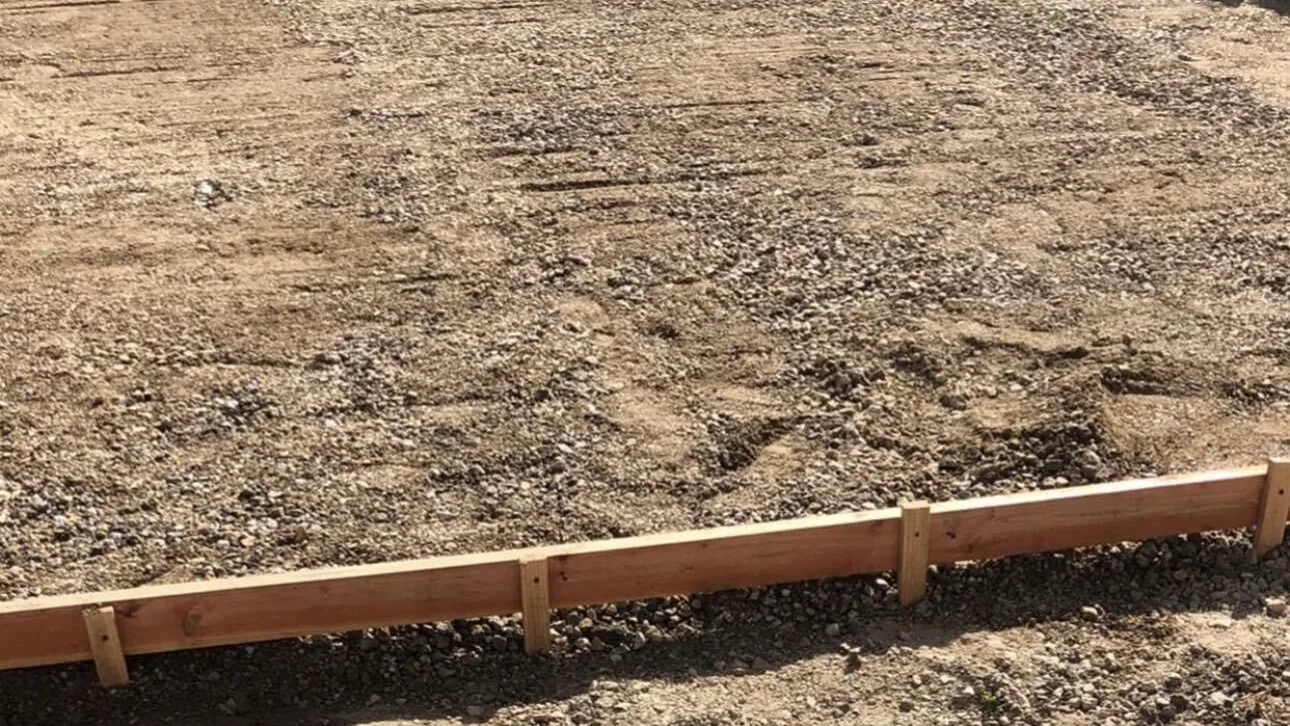
How Much Does a Concrete Slab Cost in California?
HomeGuide, a national cost guide, says a concrete slab costs $6 to $12 per square foot installed, on average. Angi, another national guide, puts a new slab at $4 to $8 per square foot, or $110 per cubic yard. Angi’s cost guide lists California at $7.70 to $8.50 per square foot.
These are market numbers, not our price list. Angi says prices run as high as $8.50 per square foot in coastal states, including California. HomeGuide puts a 30 by 30 foot slab at $5,400 to $10,800.
Soil, thickness, steel and access decide where a real slab lands. Those are the site details we look at before we pour concrete foundations and slabs across the Monterey Bay area.
What does a concrete slab cost by use?
Two national cost guides break out slab prices by what the slab is for. HomeGuide lists a size and a total price, while Angi lists a thickness and a price per square foot. The rows below are their published figures, not our numbers.
| Slab use | Size or thickness listed | Published range | Cost guide |
|---|---|---|---|
| Shed pad | 100 to 400 square feet | $600 to $4,800 total | HomeGuide |
| Patio | 4 to 6 inches thick | $6 to $9 per square foot | Angi |
| Garage floor | 400 to 576 square feet | $2,400 to $6,900 total | HomeGuide |
| Foundation slab | 800 to 2,400 square feet | $4,000 to $33,600 total | HomeGuide |
| Foundation slab | 8 to 10 inches thick | $12 to $18 per square foot | Angi |
The two guides measure foundations in different ways, so their rows do not line up. A real foundation gets priced from its plans. Treat both rows as rough markers.
For a backyard slab, see how we build a poured concrete patio. Driveways have their own numbers in our California concrete driveway cost guide.
Why do two slab bids come back so far apart?
Labor is a big share of any slab bid. HomeGuide says labor makes up 40% to 50% of the total project cost. It lists concrete materials at $3 to $7 per square foot.
The two guides disagree on labor. HomeGuide says installers charge $3 to $5 per square foot for labor, including form building. Angi lists labor at $2 to $3 per square foot to pour a slab.
Scope is the other gap. One bid may include tear-out, a compacted base, rebar and a concrete pump. Another may price a thin pour on the dirt that is already there. Ask every bidder to write out thickness, base depth, steel and access, then compare line by line.
How do thickness and steel change the price?
Each extra inch of thickness adds concrete, and the price climbs with it. HomeGuide’s thickness table shows the steps for an installed slab.
| Slab thickness | Installed cost per square foot |
|---|---|
| 4 inches | $6 to $8 |
| 6 inches | $8 to $10 |
| 8 inches | $10 to $12 |
Steel adds a little more. Angi’s table lists standard concrete at about $6 per square foot and rebar-reinforced concrete at about $7.
On a foundation, the engineer’s plans set the thickness, the footings, the rebar and the anchor bolts. We build to those plans, and the building department inspects the forms and steel before the pour.
What does the ground under the slab add?
Base prep is the part nobody sees, and it has a lot to do with whether a slab cracks. The work it takes depends on the soil under your lot.
Near the coast, federal soil descriptions show ground that formed in old sand dunes. That sand is somewhat excessively drained, with rapid permeability. It drains fast but has little cohesion, so compaction is what holds a slab flat.
Inland, some lots sit on heavy expansive clay. One clay series described for this part of California runs 40 to 60 percent clay. As it dries, it opens cracks up to 2 inches wide that reach 25 inches deep or more.
When that clay gets wet again, it swells. A slab poured on an unprepared base rides that movement and cracks. Either kind of ground can add digging and base rock to the bid.
What does tearing out an old slab add?
A replacement costs more than a first pour on bare dirt. Angi’s new-slab prices do not include demolishing and hauling away the old one. That work comes first, and it adds its own line to the bid.
The old concrete gets broken up and hauled off. Soft spots under it get dug out and recompacted before the new forms go in.
Does a backyard pour cost more?
Often, yes. A mixer truck that backs up to the forms is the simple case. When the slab sits behind the house, the concrete has to travel.
We pump concrete into back yards when the truck cannot reach, and a pump adds equipment and setup time. Backyard pumping is part of our general concrete work. Tight side yards and slopes add labor too.
How much does the finish add?
A broom finish is the plain option. Decorative work costs more, and HomeGuide lists up to $28 per square foot for decorative stamped or stained concrete. Patterns and color are covered on our stamped and colored concrete page.
Do you need a permit for a concrete slab?
It depends on what the slab is for. California’s residential code exempts sidewalks and driveways from a building permit in some cases. They must sit not more than 30 inches above adjacent grade. They also cannot be over a basement or story below, or part of an accessible route.
The same list exempts a one-story detached storage shed if the floor area is not greater than 120 square feet. That number is about the shed itself, not the slab. A shed larger than that falls outside the exemption.
A slab under a house, a garage, an ADU or an addition is part of that building’s permit. It gets built to the engineer’s plans and inspected before the pour. Confirm the rules for your address with the city or county building department.
How do you get a real number for your slab?
Published ranges cannot see your lot. What sits under the slab and what will sit on top of it set the real price.
Aguilar and Sons Construction is a licensed general building contractor based in Salinas, CSLB license #787101. We pour slabs and footings for additions, garages, ADUs, shops and sheds across the Monterey Bay area. Estimates are free and done on site. Read how we build concrete foundations and slabs, or call or text (831) 262-9943.