How we build an outdoor fireplace
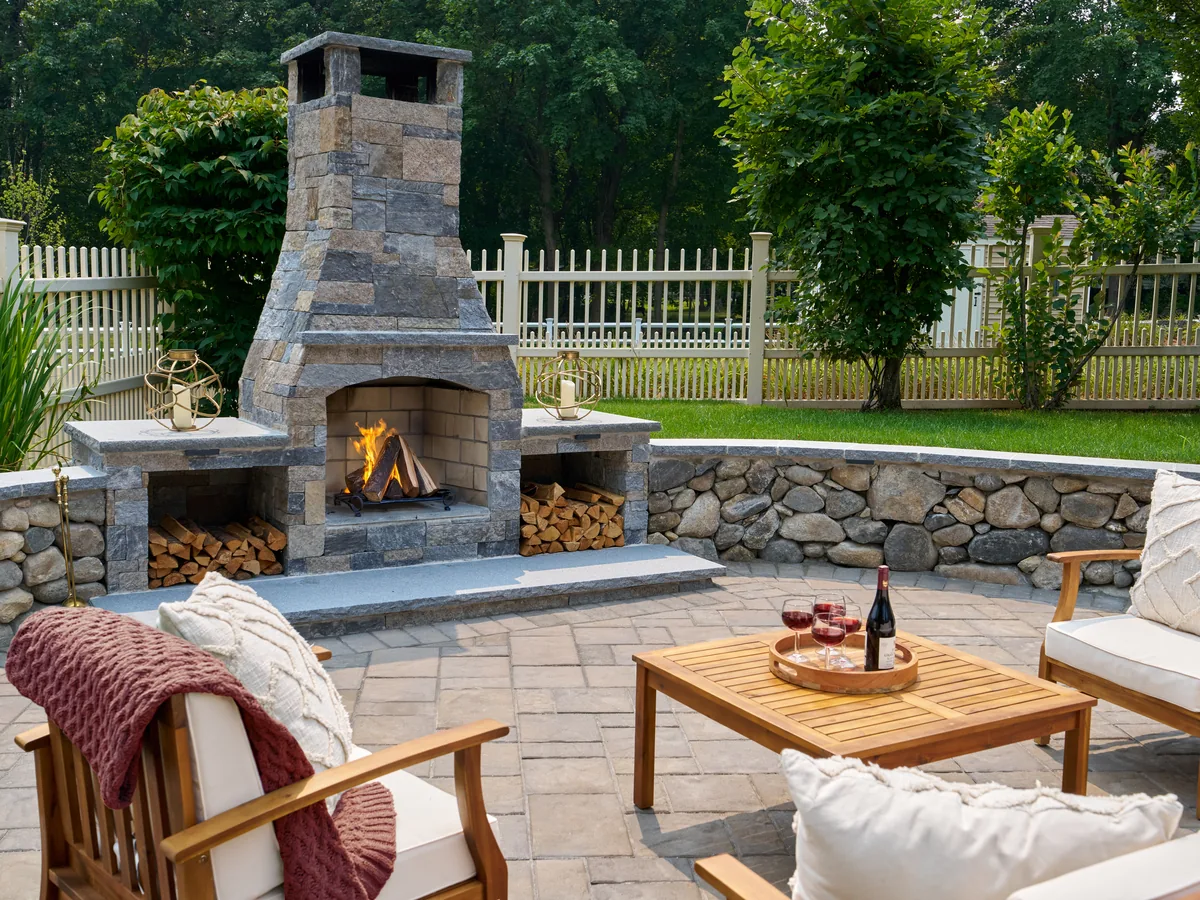
A masonry fireplace is heavy, so it starts with a footing below the patio. We set steel and pour a pad sized for the chimney and hearth. The block core goes up with rebar and grout in the cells. The firebox and flue carry heat and smoke away from the house.
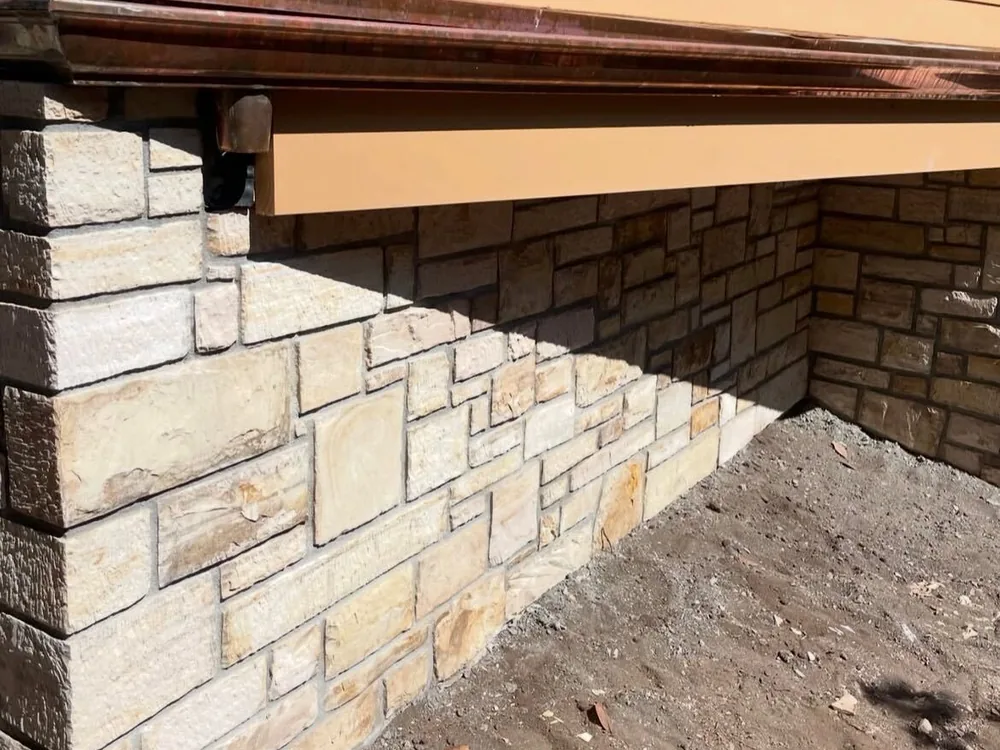
The face goes on last, in stone veneer, stucco or a mix. A cut stone cap finishes the hearth and the shelf. That same stone veneer and block work runs through the seat walls and columns nearby.
A fireplace often lands beside a wood pergola or a solid patio cover. That changes the layout, because wood framing needs clearance from the firebox and flue. Those clearances come from the current California Building Standards Code and the listing for the parts we use.
Gas fire pit installation and wood burning fire pits
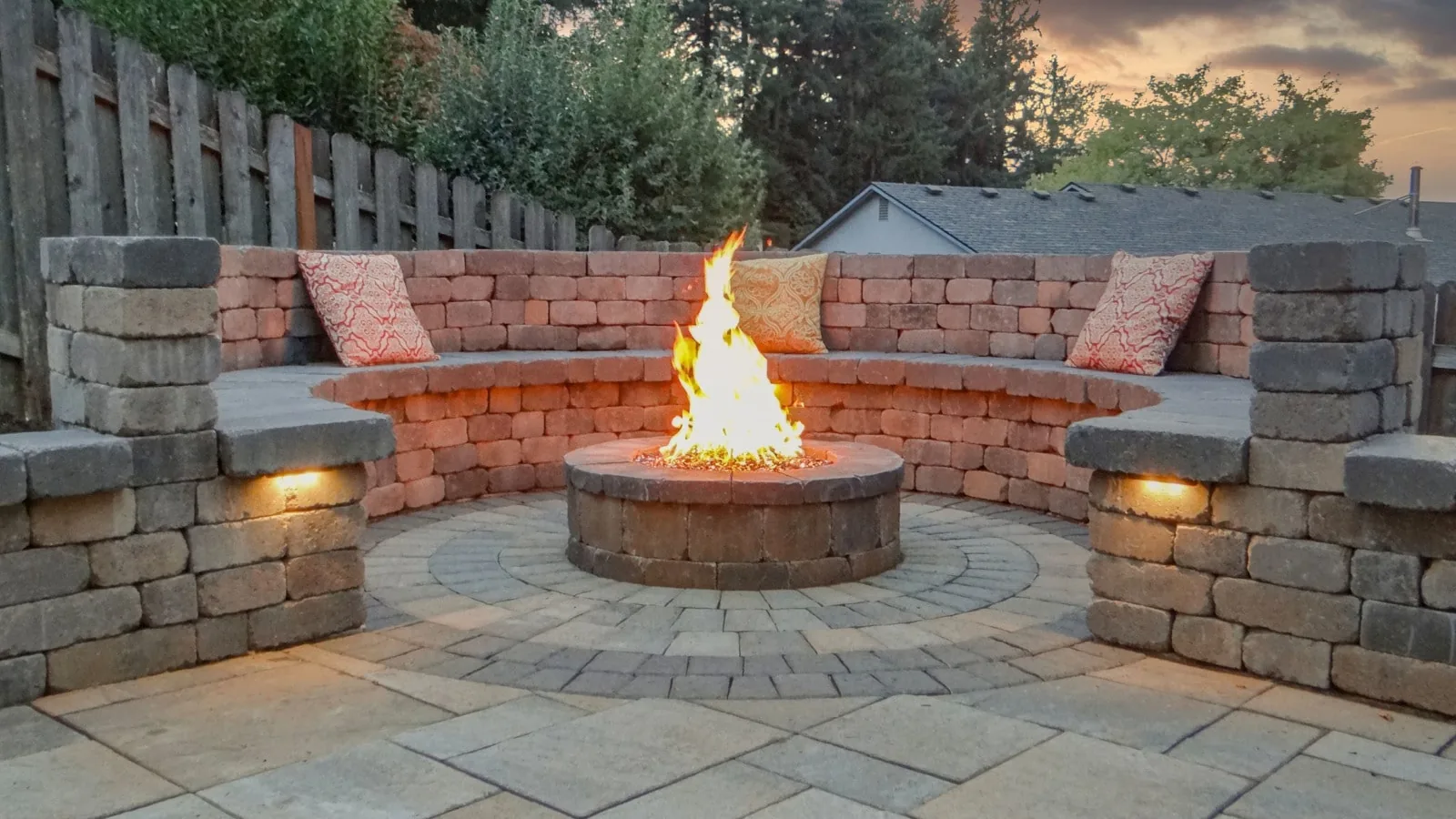
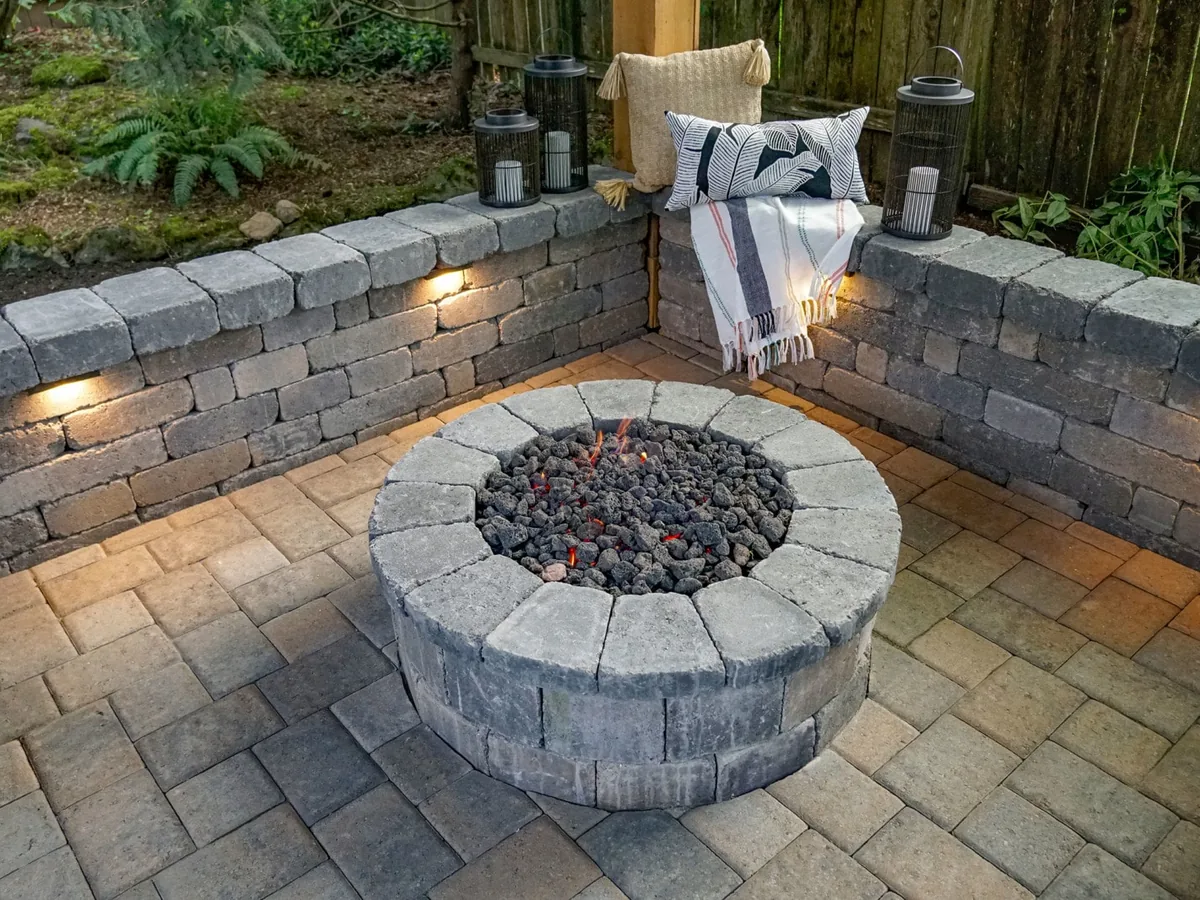
A fire pit is a simpler build that still needs a real base. We pour a pad, lay block or concrete walls, then cap it in stone. A gas fire pit gets a burner pan, a line and a control in the wall. A wood one stays open, with a steel ring inside.
Gas is the easier choice in most yards. The Monterey Bay Air Resources District warns that wood smoke can harm your lungs. It also runs a Spare the Air program in the San Lorenzo Valley for days when wood burning is discouraged. Gas lights with a switch and leaves no ash.
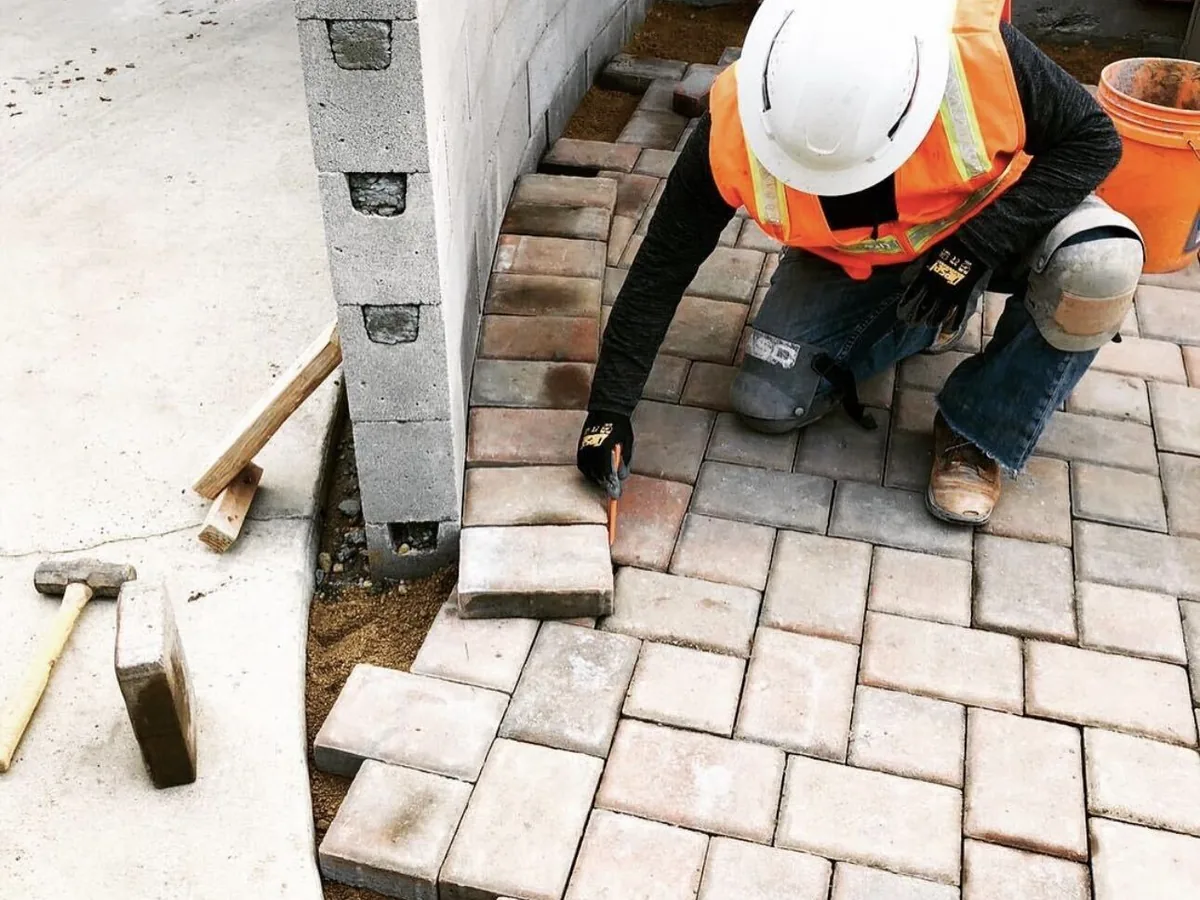
Gas fire pit installation starts with the line from the meter to the patio. We plan that run early, because the trench goes in before the pavers or the slab. Licensed trade contractors do the gas and the power, and we coordinate their work with the permits.
Placing a fire feature in Monterey Bay wind and fog
Summers on this coast are cool and foggy, with an average July temperature around 62 degrees. Freezing is rare, and the frost-free season near the coast runs about 250 to 350 days. So these get used in July as much as in December.
Wind off the bay pushes smoke around and pulls heat off an open fire pit. A fireplace with a tall back and two side walls blocks that wind and holds the heat in.
Salt air is hard on metal near the water. Caltrans treats structures within 1,000 feet of the ocean as a marine atmosphere for corrosion. On that exposure it calls for more cover over the steel. We use the same idea by the coast, with coated hardware and good cover over the rebar.